When Disruption Enriches Research
Reflections on what happens when participatory principles disrupt the 'business as usual' of research, drawn from the cross-project learning workshops in January and March 2026.
This Quarter in Brief
As projects move into implementation of their respective research activities, the Centres for Exchange (CfE) partners are encountering moments where established ways of working no longer hold, creating disruption that reveals both possibilities and constraints in shifting knowledge and power. But what happens and what is learnt when participatory principles disrupt the "business as usual" of research?
This question surfaced in different ways during the cross-project learning workshops held in January and March 2026, where partners reflected on their early implementation experiences and from moments that somehow shifted timelines, roles, and relationships.
What We're Learning About
Disrupting project cycle, phases, and timeline
Every three years Lwala runs a household health survey in Migori County, Kenya. Their CfE project started towards the end of one of these cycles, at the point of results dissemination and knowledge sharing from the 2024 survey. Historically the surveyed communities have not been engaged in the research design and implementation. Nor have they been targeted in knowledge-sharing processes.
The CfE project provided Lwala with an opportunity to do things differently. Overall, the project aimed to engage communities more meaningfully in research processes, strengthening their agency to advocate for more effective health policies and programmes. With a stronger emphasis on engagement and inclusion, the Lwala team approached the sharing of the 2024 household survey results in ways that invited participation and reflection. This had a range of positive outcomes in terms of data triangulation and strengthening, ownership and agency, and strengthening of future project design.
In November-December 2025, the Lwala team held a series of Community Research Sensitisation and Knowledge Sharing sessions in ten wards across four subcounties of Migori County (Awendo, Uriri, Rongo, Nyatike Subcounties), co-facilitated with government partners, and each involving 30 diverse community members. Rather than simple dissemination, these took the form of three-day training, including detailed exploration of research methods, case studies, and solution-oriented discussions around the findings.
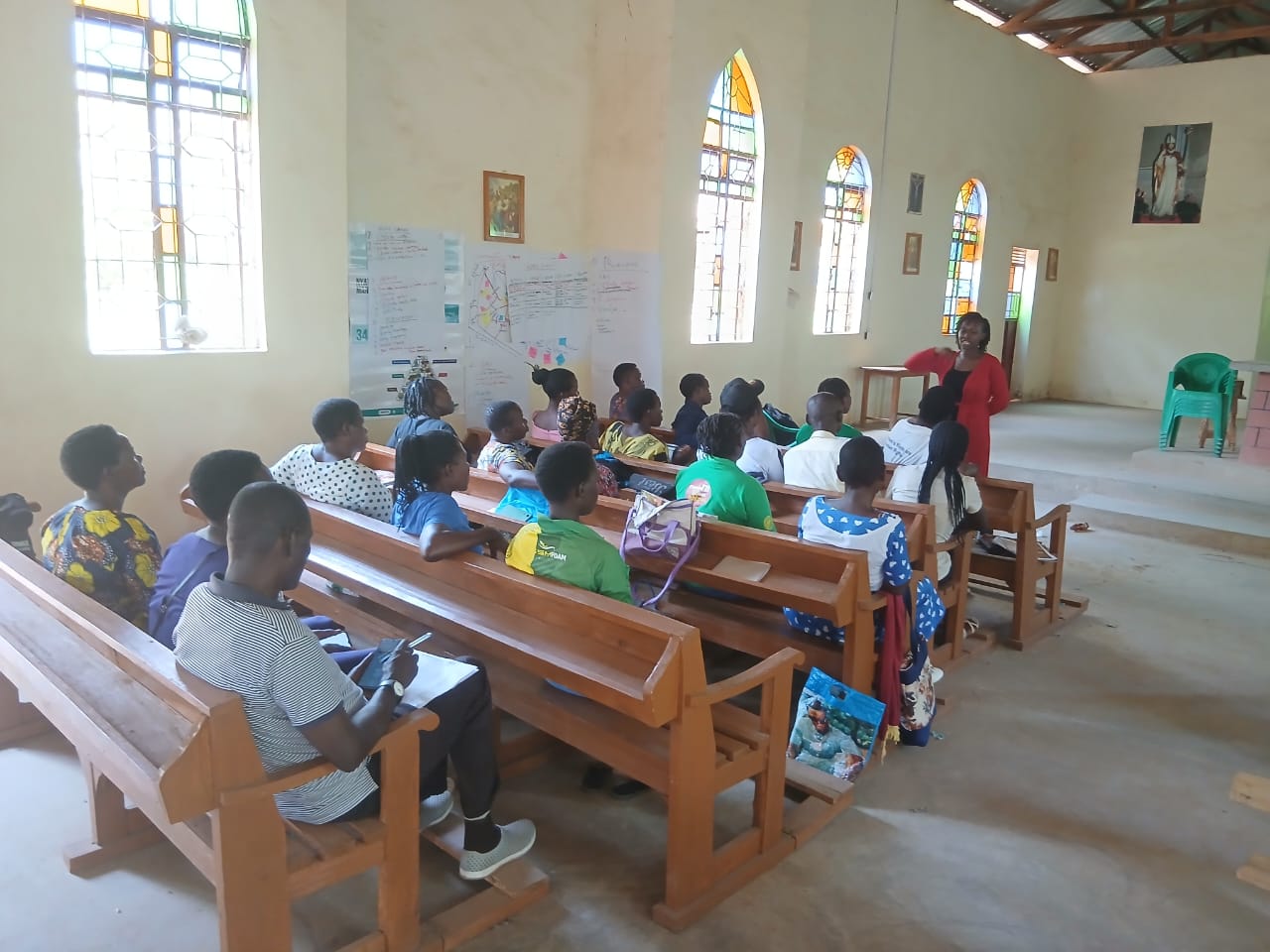
This shift in sequence, moving what was previously an end-of-project activity, was driven by context and timing rather than design, but it created opportunities for deeper insights. Through sharing findings and reflection, important local health issues, such as mental health, substance abuse and neglected tropical diseases, which had not been previously covered in the survey emerged and will be factored in for inclusion in the next survey round. As the team reflected: "Lwala's community feedback sessions raised matters such as mental health stigma, male health behaviors, and intergenerational family planning challenges which had not been covered by the survey previously undertaken."
In this sense, engagement at the point of dissemination, with approaches that did not assume the authority of the research findings, acted as a form of triangulation, revealing gaps in existing evidence and issues important to community members and therefore key to be studied in the future. As Learning and Evidencing (L&E) team member Elena Mancebo reflected: "The team is learning a huge amount about the processes of co-creation and of knowledge translation to diverse audiences. (...) The team is also learning a lot about the conditions for enabling equitable community participation (language, transport, weather, timing…)."
While this takes courage on the part of the original research team to face what was missed before, the disruption of process, with the inclusion of knowledge sharing, can lead to deeper, more "grounded" science by surfacing what was invisible through the use of "traditional" methodology.
This inclusion of later-stage engagement did not only change what knowledge was produced, but also who was able to act on it. By incorporating engagement at the dissemination stage, communities were positioned as active agents shaping both the understanding of the problem and the response to it. As the Lwala team observed: "Excitingly, communities started planning their own local interventions to address these challenges."
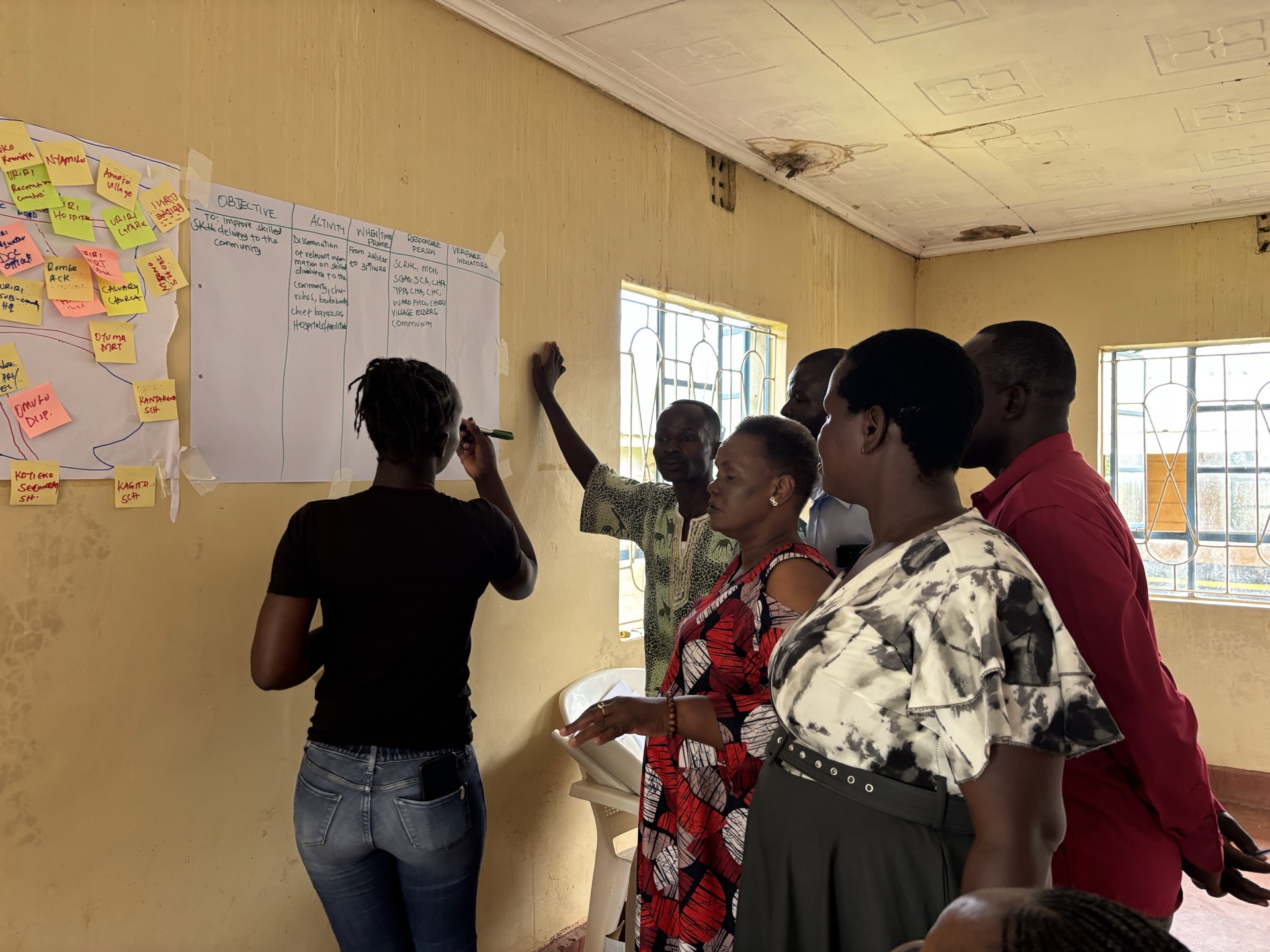
The insertion of engagement at the point of dissemination has also shifted thinking about how to plan for the next survey. The Lwala team held after-action reviews with institutional partners in early 2026 to capture lessons from involving communities, and to begin mapping how this could shape the approach to the 2028 survey. These discussions informed next steps, including plans to hold focus group discussions with community members from May 2026 to further in-depth exploration of study findings, enquire more about the community engagement so far and future needs as well as to begin shaping the design of the 2028 survey. The Lwala team reported that ward councillors are recognising the value of this process, and that Lwala leadership is exploring options to mobilise resources for further community consultation.
For Project Lead Jane Wamae, there is no going back to a non-participatory way of conducting such a research project: "Engaging the community in the Lwala household survey knowledge sharing and design process has been a departure from the traditional status quo of the top-down conduct of household surveys to a more empowering, collaborative, engaged and productive way of sharing knowledge between communities and researchers, elevating community voices and expertise. So now…we just can't carry on doing the survey the way we had been doing it!"
The Lwala experience shows that engagement can add clear value, improving research outputs, strengthening ownership, and shifting ways of working. And that it can, in turn, influence the way other phases of the research are designed.
Disrupting the position of the researcher
In many research contexts, researchers aim to be neutral and stable, objective and unchanged in their approach. Across CfE projects, participatory processes are challenging this approach as the research team members themselves become active participants, whose own assumptions, behaviours, and positions are, and should be, subject to change. Countering the notion that the researcher can stand outside the system they are studying, and instead positioning them as embedded within it and implicated in how knowledge is produced.
This shift requires sustained reflexivity: a willingness to question assumptions, engage with different ways of knowing, and continually renegotiate one's role. In their CfE project the Shujaaz team is developing a series of "how-to" guides aimed at supporting researchers to adopt youth-led participatory approaches.
They are taking their expertise in Social Behaviour Change Communication (SBCC) and applying this approach to researchers. They are deliberately seeking to change the ways that researchers approach their work through their engagement with the "how to" guides for youth-led participatory approaches. This kind of behaviour change intervention is usually used by researchers in researched communities (young people in Kenya, in the case of Shujaaz). Here, the direction is reversed: researchers themselves become the target of change activities.
With new target audiences come new questions. The drafting process that started in early January 2026 is identifying barriers to participatory action research among different groups of researchers, from those already engaged in such approaches to those requiring stronger incentives or repeated exposure. This includes mapping motivations, constraints, and institutional pressures, and using qualitative engagement (focus group discussions, prototype testing) to better understand how researchers make decisions about their practice, before drafting and sharing the guides. This approach exemplifies a shift from assuming that researchers will naturally adopt participatory approaches, to recognising that change may require intentional strategies, tools, and sustained engagement.
Disruption at the level of the researcher is therefore not only something to navigate. It can also be something to design for. In this sense, the question is not only how researchers adapt to participatory approaches, but what it takes to actively support shifts in how they think, act, and relate within research processes.
While across CfE projects, there is a growing recognition that reflexivity, while often acknowledged in principle, is not always prioritised or structurally supported in practice. Pressures to deliver, institutional timelines, and established research norms can limit the space for researchers to fully engage in this process. As a result, disruption at the level of the researcher is often partial, present in intention, but more difficult to sustain in practice, and it requires real commitment to the process.
Disrupting assumptions about neat boundaries of research topics
Embracing participatory processes means the willingness to abandon research practice as usual, and the willingness to change what is produced, how it is produced, and for whom.
In India, The Banyan works to counter the exclusion of homeless people experiencing mental health challenges. In their CfE project, people with mental health challenges are firmly centred as lived experience experts. Even in the context of an organisation with 30 years of experience in respectful inclusion, this is challenging assumptions on the boundaries of what can and should be regarded as research material.
The Banyan team has just started with formal data collection. This has been done through a series of workshops in emergency care and recovery centres where lived experience is the essence of the data valued and collected. At the same time, the team has noted that life experiences cannot, and should not, simply be commodified into data value. Lived experience experts make careful decisions about what and how they are willing to share. Consent is a continual process, which requires attentiveness, and respect for the boundaries lived experience experts set in place. As the Banyan team noted: "How people say yes to a particular project reveals something about what they know or understand about their conditions." As the team has also pointed out, this means that care is not just about appropriate procedures, and following protocols, it is deeply considered, relational and subject to ongoing negotiation. Setting change in motion is about transforming relationships, which in turn will change what is shared.
Disruption as a way to enrich research
Across this phase of the CfE programme, disruption has emerged as a by-product of working differently. In this sense, disruption is not about unsettling for its own sake, rather it is what happens when research becomes more responsive to context and more grounded in the perspectives it seeks to reflect. Shifts in how research is approached bring underlying assumptions into question, open up space for different forms of knowledge, and prompt teams to rework established ways of operating. These shifts can strengthen both the relevance of the knowledge produced and the processes through which it is generated.
At the same time, disruption is not without cost. It can introduce friction, slow momentum, and create uncertainty, particularly where teams are working within established institutional expectations and timelines. This makes it important to use the language of "disruption" and "innovation" with care, recognising that these terms can be oversimplified or interpreted as a quick fix.
The work unfolding across CfE does not follow a simple divide between disruptive and established approaches. Rather, it brings them into closer interaction. New ways of working develop alongside existing systems, creating points of tension that require ongoing negotiation in practice. In this light, disruption does not replace established systems. It co-exists with them, and it is through this coexistence, often marked by uncertainty and adjustment, that change takes shape. Disruption is rarely a clean break. It is part of the gradual work of reorganising research in ways that are more relational, responsive, and attentive to context.
Questions We're Sitting With
1. When is disruption productive, and when does it become counter-productive? 2. How much disruption can institutions absorb? 3. What does it take to turn once-off disruption into sustained change? 4. What needs to change in funding, ethics, and institutional systems to support this kind of work?
Looking Ahead
Having spent time reflecting on what is emerging through their work, during the next phase of CfE, the partner organisations will focus on deeper, structured sense-making.
Over the coming months, the L&E team will convene internal mid-term sensemaking workshops with each partner organisation and their key stakeholders. These workshops will create space to pause and reflect on what is being learned through implementation, and what these insights mean for how projects evolve.
These moments of reflection are not positioned as a review of progress against predefined plans, but as an opportunity to revisit assumptions, surface emerging patterns, and reorient practice where needed. In doing so, it allows partner organisations to adapt the second half of their projects in response to what is being disrupted, what is being learned, what is changing, and share these learning in the next cross-projects learning workshop at the beginning of June.