How Learning Begins
Reflections from the opening phase of Phase 2 of the Centres for Exchange Project.
This Year in Brief
This first issue of The Bowl reflects the early months of collective learning in Phase 2 of the Centres for Exchange (CfE) programme. During this period, partner organisations and enabling partners focused on establishing the conditions for shared inquiry, laying the groundwork for learning that could evolve through practice, reflection, and engagement with context.
Rather than imposing predefined measures of success, the collective focus during this period was on co-developing learning questions that reflect local priorities, lived experience, and the realities of implementation. This approach recognises that in participatory and equity-centred work, learning often emerges through iteration, reflection, and relationship, rather than through linear project delivery.
What follows traces how learning took shape over time during this early phase, highlighting key moments where approaches, questions, and ways of working were developed and refined.
- From February, attention focused on establishing the foundations for collective learning. This included building relationships, clarifying shared expectations, and co-developing frameworks and ways of working to support programme-level and cross-project learning, while structuring approaches for future project specific learning.
- In March, the Learning and Evidencing and Network Facilitator teams facilitated a programme-wide kick-off workshop, introducing the CfE learning approach, principles, and expectations for the phase ahead. This was followed by a series of one-to-one conversations with each partner organisation running until April, creating space to better understand organisational contexts, priorities, constraints, and existing learning practices.
- Alongside this relational work, shared learning infrastructure began to take shape, including the CfE Learning Framework and the Learning Network model. Together, these elements provided a common scaffolding for learning which still allowed sufficient flexibility for different organisational realities and priorities.
- In May, all partners came together in Mombasa, Kenya for an in-person convening. The gathering created space to deepen relationships, discuss emerging frameworks, and begin early peer exchange, while also aligning around shared commitments and ways of working for the phase ahead.
- Following the convening, partner organisations moved into a period of developing their learning agendas and early project planning. Guided by the L&E team, each organisation participated in a three-part workshop series to co-design its project learning agenda, focused on clarifying learning questions, unpacking activities in relation to those questions, and aligning with the CfE Learning Framework.
- As learning plans took shape, the L&E team supported partner organisations to translate their learning questions into practical plans and simple processes for tracking emerging insights over time. This included developing Individual tracking documents that feed into consolidated insights tracked by the L&E partner.These tools, alongside ongoing monthly meetings, have started to situate learning as ongoing work. Insights accumulate and connect steadily, rather than being extracted or assessed against fixed indicators.
- The first quarterly cross-project learning workshop, held in September, created space for partners to reflect together on early experiences. Partners shared what was surprising, challenging, or unclear in their work, helping surface early cross-cutting questions and patterns across projects, and begin identifying patterns across projects.
By the end of this period the practice of collecting and reflecting on learning was embedded across projects in planning, study design, and early research activities. Together, this early phase laid the groundwork for the cross-project insights explored below.
What We're Learning About
Challenging assumptions and finding shared meaning
In exploratory and participatory research, meanings tend to rise slowly from the research process, rather than being fully defined at the outset. Different people bring different meanings to the same concepts, fostering collective understanding over time.
This requires active work: shaping and reshaping research questions, undoing assumptions and collectively crafting shared meaning within each team. Across CfE projects, the importance of doing this work from the very start has emerged
1. When concepts don’t travel
One of the first challenges to surface in early co-design is that concepts familiar to researchers do not always travel easily across contexts. Words and ideas that appear shared can carry very different meanings in real life situations, shaping how issues are understood and prioritised. The Shujaaz project offers a clear example of how making these differences visible early on can fundamentally reshape a project’s direction.
Shujaaz has more than 15 years’ experience working with Kenyan youth, and their CfE project builds on this long-standing experience. But early engagements surfaced important differences in perspective that would go on to shape the direction of the work.
In their project framing, Shujaaz initially approached climate change as an existential threat. In early co-design workshops, however, young people framed climate and environmental stresses—ranging from flooding and extreme heat to garbage and pollution—not as distinct stresses, but rather as everyday hardships shaped by broader conditions of poor governance and inequality. As one Shujaaz team member reflected:
“The youth conceptualisation of the topic was different to ours. For youth a hole in the roof filling a room with water is ‘flooding’.”
Their concerns centered instead on more immediate pressures, including unemployment, unstable housing, early pregnancies, crime, and substance use.
Reflecting on this insight, the Shujaaz team noted that:
“Formulating questions requires linking to climate change in ways that make sense to the young people we work with, because their concerns are not necessarily what we are assuming.”
This early misalignment made visible how easily familiar research concepts can obscure very different lived realities, and how critical early co-design can be in surfacing and aligning across these differences.
2. Labels, assumptions, and epistemic authority
Differences in meaning are not only about concepts, but also about the labels and categories used to describe people and communities. In engaged research, these labels often carry implicit assumptions about vulnerability, expertise, and authority. Early co-design can bring these assumptions into view, creating space to question who defines the problem, and on what terms.
Early engagement in WCCI’s project in Kenya surfaced issues about labels commonly used to describe indigenous women in research and policy contexts, and the assumptions these labels carry. In workshops bringing together indigenous women and academic researchers, participants actively challenged framings that positioned them as “vulnerable” or “excluded”, instead asserting their agency, authority, and knowledge. This prompted a pause within the WCCI team. As one team member reflected, “unpacking the blanket narrative of grassroots women as ‘vulnerable’ shifted the lens towards recognising their agency, resilience, and leadership.” It also surfaced how labels both reflect existing power relations and, when left unchallenged, can actively reinforce them. This shift was not only about language, but about whose knowledge was recognised as legitimate in shaping the research.
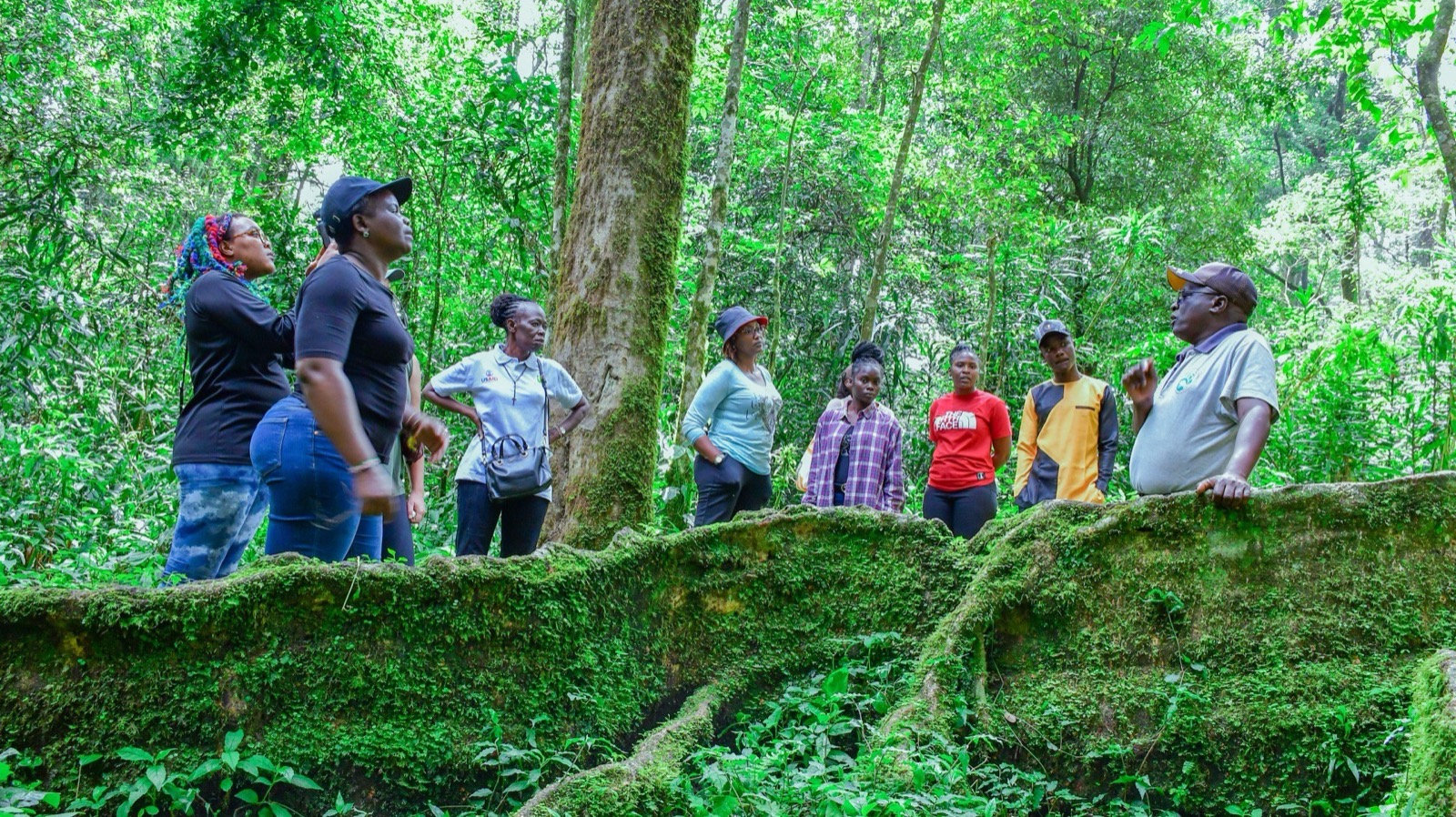
When space was created for indigenous women to lead discussions and speak from their lived experience, they articulated both the issues they faced and the strategies they were already using to address them. As one participant reflected:
“When we gave the women time to speak, they were able to explain the issue, how they are tackling it with their knowledge.”
This challenged assumptions about who holds expertise, and demonstrated how meaning is shaped by place, history, and lived relationships to land.
This learning is explored in greater depth in a reflective blog post published following the WCCI learning agenda workshop.
3. Meaning emerges through reflection and iteration
Shared meaning does not only emerge through early co-design; it also develops over time through reflection and iteration. For organisations with long histories of participatory work, moments of collective reflection can surface accumulated knowledge, reshape understanding, and reframe how past experience informs present practice.
This dynamic was evident in SEARCH’s reflections during this period. In the past, SEARCH has focused on developing articles as a means of documenting projects. Initiating the CfE project has highlighted how organisational value is not just about outputs; it also exists in the stories the organisation has engendered. This makes storytelling a potentially powerful method of capturing the learnings and impact of this well-established participatory organisation. Reflecting on their own journey also sparked pride in how much had been accomplished and prompted renewed attention to how accumulated learning could inform current and future work.
This experience highlights how reflection can be a generative act in participatory research, not simply documenting what has happened, but reshaping how organisations understand their own knowledge, history, and role. Meaning, in this sense, is not fixed, but continually revisited and reworked as contexts and relationships evolve.
Taken together, these experiences underscore a central learning from the early phase of CfE work: shared meaning does not emerge automatically, nor does it rest solely on concepts, labels, or methods. It is actively produced through co-design, sustained reflection, space for telling our stories and a willingness to continually question assumptions. Across projects, partners are finding deeper shared meaning in ways they couldn’t have anticipated.
Shifting power requires interrogating research processes
Shifting power in knowledge exchange needs to start long before data collection. Across CfE projects, partner organisations are (re)discovering that how research unfolds, its pace, methodology, and decision points, can matter as much as the research findings themselves. Interrogating and reimagining research processes is a core intention of the Centres for Exchange programme, and partners are partners specifically to explore this in practice. The learning below reflects how this work is unfolding across different contexts.
This focus on research process was made tangible during a workshop convened by Praxis in India in November 2025.
The workshop created an opportunity to observe and reflect on power-shifting in real time, serving as an embodied case study of how power moves when research methodologies are stretched, rethought, or redesigned.
1. Power shifts through flexibility, reflexivity and iteration
Across contexts, partners emphasise that participatory research does not move at the pace traditional research projects assume. As a representative from Lwala noted:
“Participatory work runs on a different timeline. Going for efficiency can harm the process and the outcomes.”
Rather than signaling failure, this friction reveals the work participatory research depends upon: building trust and relationships, making sense of evolving insights and contexts collaboratively, negotiating priorities, and revisiting assumptions along the way. This relational and interpretive work is often deprioritised when efficiency and delivery are prioritised.
Participatory work requires space for reflection and learning, but tensions often arise when teams are steeped within the work, without the time and space to allow for reflection As a Shujaaz team member succinctly put it:
“We can’t cook and taste the food at the same time.”
One of the clearest ways this plays out is in decisions about when participation begins in the research process. As Everlyne Kemunto from Shujaaz reflected, the team has shifted away from treating data collection as “the point of entry for participation”. Instead, they have moved participation earlier in the research process, beginning with co-creation and co-design of the research focus and themes.
This mirrors a key provocation from the Praxis workshop: power begins to shift when research methodologies and questions are actively shaped by the people they involve.
2. Power shifts when lived experience experts lead
Across projects, partners are learning that meaningful participation is not only about including lived experience experts, it is about ensuring their priorities and perspectives shape research throughout the process. As Jane Wamea from Lwala reflects:
“Participatory research is changing one’s mindset from what you are used to doing to what the community wants.”
In their reporting The Banyan team similarly reflected that its reflective and open culture is “helping the organisation see lived experience as a valuable source of knowledge, not just personal stories.” This shift transforms whose knowledge is considered valid, what counts as evidence, and who holds decision-making power in research.
The Praxis workshop reinforced that shifting power is not a single event but a series of methodological decisions made throughout the research cycle, beginning with priority-setting. During a field day in the Nangamalai village, the research team observed that health was not the community’s primary concern, despite repeated prompts from the research team that tried to raise it various times. Community members instead identified land rights as the major issue they most wanted to focus on, during the next phase of action research that Praxis is planning to conduct.
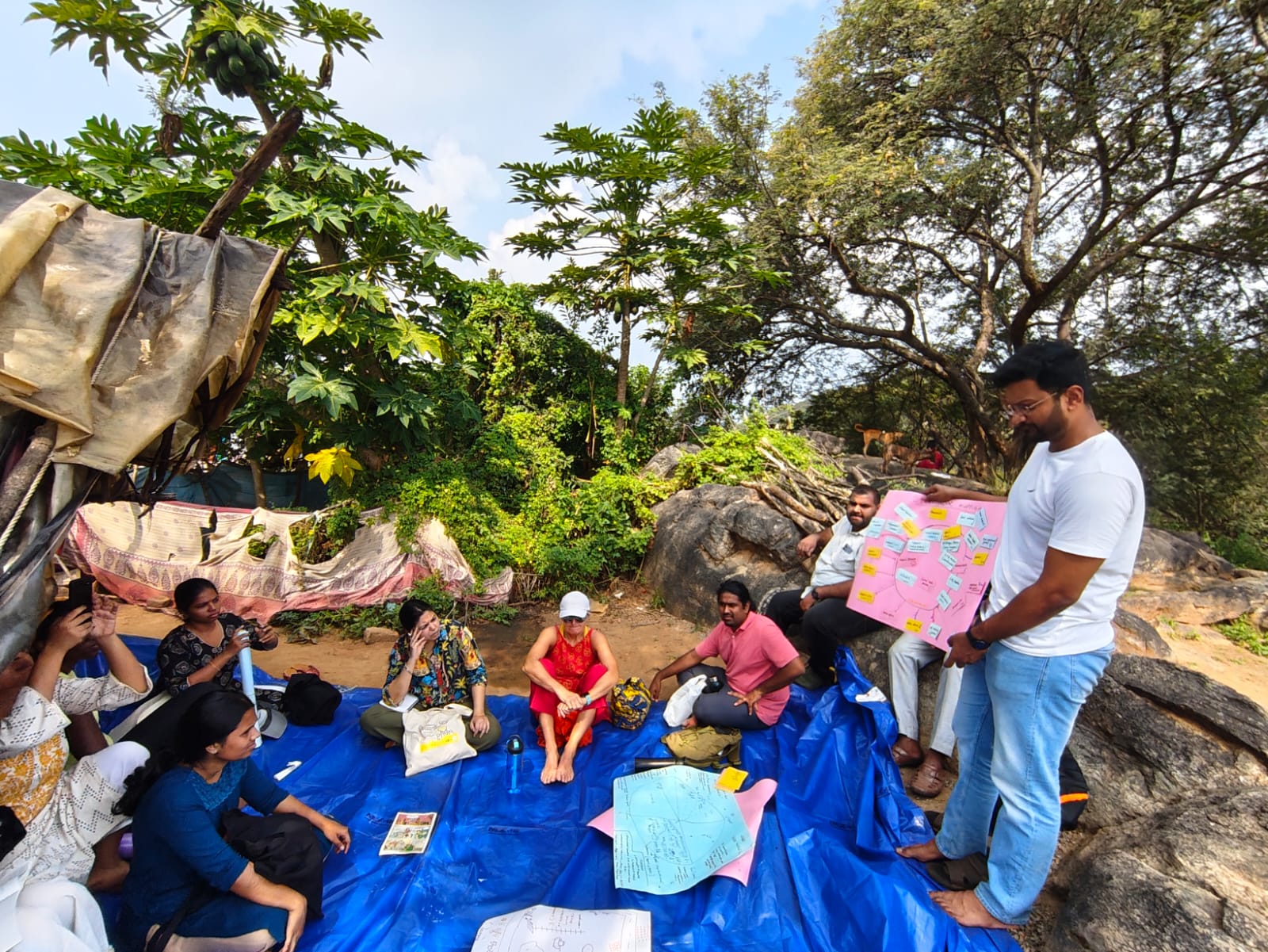
This moment illustrated how community-defined priorities can reorient the purpose and direction of an entire research effort.
Praxis reinforced this learning by grounding methodological authority in lived experience experts themselves. During the workshop, they emphasized that research tools are not rigorous in and of themselves; their rigour depends on how they are used and the lived experience brought to them. As one of the facilitators explained:
“Tools should not be an end in themselves. Those using the tools should be drawing on their lived experience. That is what makes research the most rigorous.”
Lived experience experts do not simply add perspective; they actively shape research processes, tools, and methods.
3. Institutional structures can reinstate power
Even as partners actively work to reshape research practice, they encounter structural and institutional constraints that can undo efforts to flatten pre-existing power structures A member of the Sonke notes that:
“Ethics boards are potential barriers to participatory research, especially with sensitive topics.”
Both Sonke and SEARCH have also reflected that internal organisational hierarchies can hinder progress when the purpose and processes of participatory research are shared. The Shujaaz team similarly observed that:
“The output-based requirements of research processes may work against people’s willingness to take the time and risks that participatory work may require.”
These constraints reflect broader institutional logics, such as prioritising speed, pre-defined outputs, and extractive forms of knowledge production, that many partners are actively working to question and shift. Shifting power requires naming these dynamics explicitly and collectively creating the conditions in which different forms of knowledge can take root and be sustained.
Together, these experiences reinforce a central CfE learning: shifting power in knowledge exchange is not a single intervention or moment, but the cumulative result of everyday methodological choices. Decisions about pace, who leads key moments, and how institutional constraints are navigated all shape whose knowledge counts and how research unfolds. Power-shifting, in this sense, is ongoing, relational, and contested. It requires sustained attention to process, not just participation or outcomes.
Further reflections from the Praxis workshop are explored in a longer-form blog post, which documents the experience and learning in more depth.
Questions We’re Sitting With
Building on the insights emerging from this early phase, the CfE network is now turning toward a set of deeper questions that will guide ongoing inquiry across projects and at programme level.
How can early co-design and shared meaning-making be sustained as projects move into implementation, without being overridden by institutional timelines, deliverables, or reporting pressures?
As meanings, labels, and assumptions shift through participatory work, how does this change what knowledge is produced, what counts as rigour, and who that knowledge holds value for?
What does it take for lived experience to shape not only participation, but leadership and decision-making across the research cycle, and with what implications for equity and inclusion?
What institutional structures, incentives, and relationships enable participatory approaches to genuinely shift power? And where do they continue to constrain or pull practice back toward conventional research norms?
How can CfE’s own learning systems, tools, and rhythms remain reflexive and non-extractive as learning deepens, especially as insights are synthesised and shared beyond the network?
Looking Ahead
We will begin the new year with the next quarterly cross-project learning workshops. These sessions bring partner organisations together to share their insights emerging from their work so far, reflect on challenges, and learn from how others are navigating similar questions in different contexts. This is the opportunity to collectively surface patterns across projects, test emerging interpretations, and deepen shared understanding of what it takes to shift power in knowledge exchange in practice. Insights from these sessions will help shape the focus of the next phase of learning and inform future editions of The Bowl.